How Much Are Missed Calls Costing Your Dental Practice?
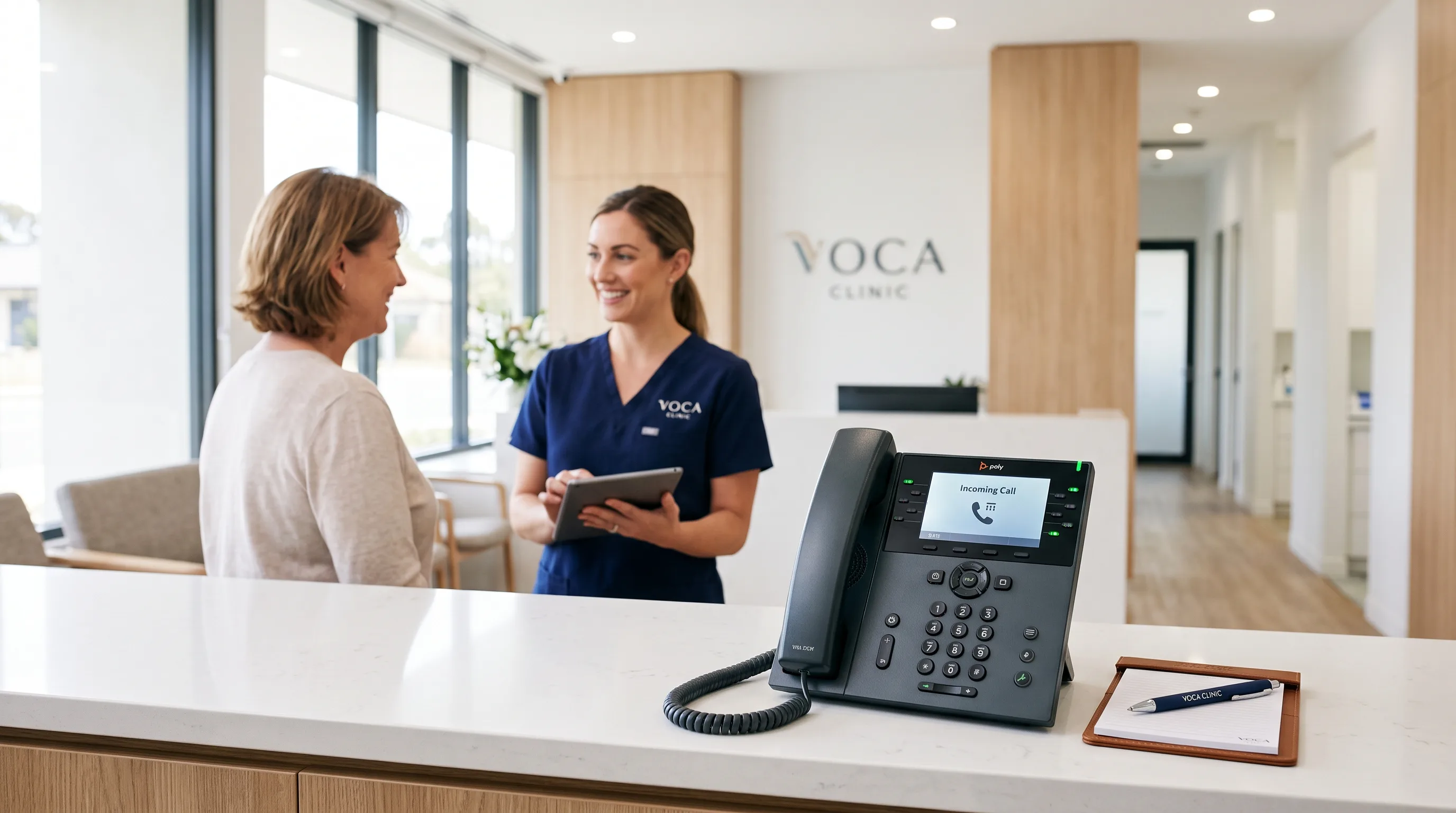
A practical, no-hype breakdown of where the money actually goes — plus a simple formula to calculate your own number.
It's 11:40 on a Tuesday morning. Two patients are checking out at the front desk. A hygienist is waving from the hallway because the noon patient needs to reschedule. And the phone is ringing.
Nobody recognizes the number. By the time anyone has a free hand, it's gone to voicemail. Whoever was calling doesn't leave a message.
You'll probably never know what that call was about. A routine cleaning? Someone who finally decided to deal with a cracked molar after searching "dentist near me" on their lunch break? Either way, it's gone — and there's a good chance they've already dialed the next practice on the list.
This isn't a story about a badly run office. It happens at well-organized, busy, successful practices every single day. The useful question isn't "why did we miss that call." It's "how much is this actually costing us, and what do we do about it."
The Problem Nobody Puts on a Spreadsheet
Most dental practices track a lot of numbers: production, collections, hygiene reappointment rates, case acceptance. Very few track how many phone calls come in versus how many actually get answered.
That's understandable — it's hard to measure something you're not looking at. But the phone is still the front door of the practice. It's how most new patients make first contact, and how existing patients handle everything from scheduling to simple questions.
And that front door is under constant pressure:
- The front desk is checking a patient in.
- Someone's on hold with an insurance company.
- It's lunch, and the team is down to one person up front.
- It's 6:45 p.m., and the office closed 45 minutes ago.
- A staff member called in sick and nobody backfilled the phones.
- Two lines ring at once and only one can be picked up.
None of that is a training problem. It's math. One person can have one conversation at a time, and a dental front desk has more than one job.
Why This Keeps Happening — Even at Good Practices
Staffing is genuinely tight across the industry, not just at your office. According to the American Dental Association's Health Policy Institute, only 60% of dentists say they currently have an adequate number of dental hygienists on staff, and among those actively trying to hire, 91% describe it as very or extremely challenging. Heading into 2026, staffing challenges tied for the single biggest concern dentists reported, alongside dental insurance issues. When a practice is stretched thin clinically, front-desk coverage is often the first place the strain shows up — everyone gets pulled toward whatever's happening in the operatory.
Call volume doesn't spread evenly across the day. Mid-morning and mid-afternoon tend to be the busiest stretches for both walk-in activity and phone calls — exactly when staff have the least bandwidth to pick up a new line.
A meaningful share of calls happen outside business hours. Evenings and weekends are often when people finally get around to something they've been putting off — booking a cleaning, calling around about a toothache, following up after seeing an ad. If a generic voicemail greeting is the only thing waiting for them, plenty simply try again somewhere else the next morning, if they try at all.
Voicemail isn't the safety net it looks like. Studies on caller behavior in dental and healthcare settings describe a consistent pattern: when a call goes unanswered, most callers hang up without leaving a message. They don't wait for a callback — they move on to whichever office answers next. Exact percentages vary by study, but the direction is the same everywhere it's been measured.
What an Unanswered Call Actually Costs
Here's the part that tends to get people's attention: you almost certainly already paid for that phone to ring.
Industry estimates for the cost of acquiring a new dental patient — through SEO, Google Ads, referral programs, or traditional marketing — commonly fall somewhere in the $150–$400 range, depending on the market and channel. Many practices also estimate a new patient's value over the life of the relationship somewhere between $5,000 and $10,000 or more, once you factor in hygiene visits, restorative work, and referrals.
So when a new patient's call goes unanswered, it isn't a neutral, invisible event. You spent real marketing dollars to generate that phone call, and nobody was there to pick it up. The lead didn't fail to convert because of price or treatment planning — it failed to convert because it never became a conversation.
Existing patients matter here too, even if the dollar math is less dramatic. A patient who can't get through to reschedule a cleaning, ask about a bill, or confirm an appointment time is quietly forming an opinion about how easy — or hard — it is to deal with your office.
You already paid for that phone to ring. The only real question is whether anyone was there to answer it.
Practical Fixes Before You Touch Any Technology
Before looking at any tool, most practices can tighten things up with a few operational changes:
- Pull your own numbers first. Many phone systems and VoIP providers can report how many calls came in versus how many were answered, and when the misses cluster. You can't fix a leak you haven't measured.
- Staff to the call pattern, not just the schedule. If mid-morning and lunch are consistently rough, a short-term fix might be as simple as staggering breaks or cross-training someone in the back to jump on the phone during predictable crunch windows.
- Give voicemail an actual job. A callback protocol — one person specifically responsible for returning missed calls within a set window, every day — recovers some of what voicemail alone won't.
- Consider a human answering service for overflow. Traditional dental answering services can catch calls your front desk can't get to, though they're typically limited to taking a message rather than booking directly into your schedule.
These steps genuinely help, and they share a common ceiling: all of them still depend on a person being available at the right moment, and people can only be in one place, on one call, at a time.
Where AI Receptionist Technology Actually Fits
This is the gap an AI receptionist is built to close — not by replacing your front desk, but by making sure the phone itself is never the bottleneck.
A dental-specific AI voice receptionist answers every call on the first ring, at any hour, and holds a natural conversation instead of routing callers through a phone-tree menu. Trained on a practice's own information — services offered, hours, insurance accepted, office policies — it can handle the routine questions that eat up a disproportionate amount of front-desk time, and check availability to book, reschedule, or cancel an appointment directly, without a "someone will call you back."
That distinction matters more in dentistry than it might elsewhere. A generic AI answering bot can take a message. Technology built around dental-specific phone workflows is meant to understand the difference between a new-patient inquiry, a routine reschedule, and a question about what insurance the practice accepts — and respond appropriately, in something that sounds like a conversation, not a menu.
The honest way to think about it: it's a backup layer, not a replacement. It's there for the moments your team is already at capacity — busy, closed, short-staffed, or simply on another line — so a routine call doesn't turn into a lost one.
Where Humans Are Still Essential
None of this replaces your team, and it shouldn't try to.
AI voice technology is well-suited to structured, repeatable conversations: answering FAQs, checking a calendar, booking a slot, taking down the right details. It is not a substitute for clinical judgment. A genuine dental emergency, a nervous patient who needs reassurance, a complicated insurance situation, or a sensitive conversation about treatment and cost still calls for a human — and any AI receptionist worth using should be built to recognize when a call needs to be handed off rather than handled.
No voice AI is perfectly accurate, and any vendor who tells you otherwise isn't being straight with you. The realistic goal isn't "the AI never makes a mistake." It's "fewer calls disappear into voicemail than before" — which, for most practices, is a meaningfully lower bar to clear, and a meaningful improvement all the same.
The Missed-Call Math: A Formula for Your Own Practice
If you search this topic, you'll find calculators claiming anywhere from a few thousand dollars a month to well over a million dollars a year in "lost revenue" from missed calls. Both extremes should make you raise an eyebrow. The honest answer is that it depends entirely on your own call volume and conversion rate, not on someone else's industry-wide multiplier — which is exactly why a formula is more useful than a headline number.
The formula:
Average calls/day × Days open/month × % of calls missed × % of missed calls that were scheduling-related × % of those that would have booked × Average visit value = Estimated monthly value at risk
A conservative, illustrative walkthrough — swap in your own numbers:
- 50 calls a day × 22 days open a month = 1,100 calls/month
- Even a modest 20% miss rate = 220 missed calls
- If about 65% were scheduling-related = ~143 calls
- If just 1 in 5 of those would have booked = ~29 lost visits/month
- At a conservative $150 average visit value = ~$4,350/month, or roughly $52,000/year
That's a deliberately cautious estimate. It doesn't count higher-value procedures, it doesn't count the lifetime value of a new patient who ends up going elsewhere permanently, and it uses a miss rate on the low end of what's commonly reported. Run your own numbers and the figure is often larger, not smaller.
6 Signs Your Practice Might Be Losing Calls Without Realizing It
- No one currently tracks answered calls versus missed calls
- Staff can name specific times of day when "the phones get away from us"
- Patients have mentioned trying to call more than once before reaching you
- After-hours calls go to a generic voicemail greeting with no follow-up plan
- Voicemail messages sometimes sit for hours before anyone calls back
- The office has had short-staffed days where the phones simply "hoped for the best"
If two or more of these sound familiar, it's worth running the math above before assuming the problem is smaller than it is.
Where VOCA CLINIC Fits Into This
VOCA CLINIC is an AI receptionist built specifically around how dental practices operate — not a generic customer-service bot repurposed for healthcare.
It answers inbound calls 24/7, handles the routine questions patients ask most (hours, services, insurance accepted, directions, general pricing), and books, reschedules, or cancels appointments in real time during the call itself. The current version books directly into a connected scheduling calendar (currently powered by Zoho Bookings on the back end), with deeper integrations into dental practice-management platforms planned as the product develops — if your team uses a specific PMS, it's worth asking directly about the current state of that connection rather than assuming.
Because this involves patient information, VOCA CLINIC is built with healthcare-appropriate privacy and security practices in mind from the ground up, not bolted on afterward. If formal compliance documentation matters for your practice's vendor review, that's a fair thing to ask about directly before signing up.
Setup doesn't require new hardware or a new phone number — it connects to the line you already have, and most practices are up and running within about 48 hours. VOCA CLINIC is currently onboarding a limited number of partner dental practices in the U.S., with current plans starting at $299/month on usage-based pricing that scales with call volume.
Try It Before You Commit to Anything
The current offer is straightforward: a 7-day free trial, or your first 100 calls — whichever comes first — with no credit card required. That's enough time to see exactly how many calls come in after hours, on weekends, or during your busiest stretch, and how many of them are the kind of routine, structured conversation an AI receptionist could have handled on the spot.
If you've been putting off doing anything about missed calls simply because it's hard to know how big the problem actually is, that's the fastest way to find out — before you decide anything.
Book a free demo with VOCA CLINIC →